A man’s pants tell the truth before his shirt ever gets a chance. For years, slim fit was treated like the only serious answer, but relaxed fit chinos are now changing what American men expect from everyday style. The shift is not about dressing sloppier. It is about admitting that clothes should move, breathe, and still look sharp after a full day of work, errands, dinner, and whatever else lands on the calendar.
This change also says something bigger about taste. Men are less willing to suffer through tight thighs, pulled seams, and ankle-clinging cuts because a store mannequin made them look current. A cleaner wardrobe now starts with proportion, comfort, and confidence, not squeeze. That is why style conversations on modern lifestyle and fashion platforms keep circling back to pants that feel natural without looking careless. The best chinos today do not announce themselves. They sit right, fall clean, and let the rest of the outfit work.
The End of the Slim Fit Habit
Slim fit pants did not disappear because men stopped caring about style. They lost ground because daily life exposed their weak spots. A pair that looks good while standing still in a fitting room can become annoying the moment you sit in a car, climb stairs, or spend eight hours at a desk.
American style has also loosened in a broader way. Offices are less formal, sneakers are more accepted, and weekend clothing has influenced weekday dressing. That does not mean men want to look unfinished. It means they want pants that respect the body instead of fighting it.
Why Slim Fit Pants Started Feeling Dated
Slim fit pants had a strong run because they offered a fast answer. They made outfits look narrower, cleaner, and more intentional at a time when baggy khakis still haunted many men’s closets. For a while, that felt fresh.
The problem came when slim fit became a default instead of a choice. Men with athletic legs, wider hips, or larger calves were told to make the cut work anyway. The result was often a pant that pulled across the seat, wrinkled around the thighs, and looked tense instead of tailored.
Style rarely ages badly overnight. It starts to feel off when the body language changes. A man tugging at his waistband before sitting down is not giving polished energy. He is giving trapped energy, and no expensive shirt can fully fix that.
How Men’s Chinos Became Everyday Uniform Pieces
Men’s chinos earned their place because they live between denim and dress pants. They can handle a casual Friday, a backyard dinner, a school pickup, or a low-key date without feeling overdressed. That middle ground matters in the U.S., where many men want one pant to cover half the week.
The best pairs now borrow from workwear, tailoring, and sportswear at the same time. You see stronger cotton twill, roomier thighs, cleaner tapers, and waistbands that do not punish movement. That blend makes them easier to wear across age groups and body types.
A man in Austin might wear olive chinos with a camp collar shirt and loafers. A guy in Chicago might wear the same idea with a crewneck sweater and leather sneakers. The pant stays quiet, but the outfit still feels considered.
Comfort Is Rewriting What Sharp Means
Sharp used to mean narrow. That belief did plenty of damage. It made men confuse tightness with tailoring and discomfort with discipline. A better standard has taken over: clothes should follow the body, not clamp it down.
This is where relaxed fit chinos become more than a trend. They give men space where space matters, then keep enough structure to avoid looking loose in the wrong way. The fit does not surrender polish. It builds polish from comfort first.
The Fit Works Because It Respects Movement
Good relaxed pants have room in the thigh, a calmer seat, and a leg opening that does not grip the calf. That sounds simple, but the effect is huge. Walking looks easier. Sitting looks cleaner. The fabric hangs instead of twisting.
A common mistake is assuming relaxed means oversized. It does not. A strong relaxed cut still needs shape through the waist, rise, and hem. The difference is that the pant is designed around movement instead of restriction.
Think about a man commuting from Brooklyn to Midtown. He may stand on a train, sit in meetings, grab coffee, and walk ten blocks after work. Pants that survive that day without bagging, pinching, or looking strained are doing more than covering his legs. They are supporting the whole outfit.
Casual Office Style Made Room for Better Pants
Casual office style changed the rules faster than many men expected. The old split between “work pants” and “weekend pants” has blurred, especially in tech, media, real estate, marketing, and small business offices. Men now need clothes that feel relaxed without looking like they gave up.
Chinos fit that space better than jeans in many workplaces. They feel softer than wool trousers but more intentional than denim. Add a knit polo, an Oxford shirt, or a clean overshirt, and the outfit reads smart without shouting for attention.
The counterintuitive part is that looser pants can look more professional than slim ones. When fabric falls straight and unbothered, the body looks calmer. That calmness reads as confidence, especially in rooms where everyone else looks slightly uncomfortable in pants that were cut for a different decade.
Proportion Is the Secret Most Men Miss
The relaxed shift is not only about comfort. It is about balance. Once pants gain a little width, shirts, shoes, jackets, and belts need to make sense with them. That is where many men either win the look or lose it.
Modern menswear works best when each piece has a conversation with the next. A wider chino leg can make tiny sneakers look weak. A shrunken shirt can make the lower half seem heavy. Proportion is not complicated, but it does demand attention.
How to Balance Roomier Pants With Shirts and Jackets
A relaxed pant pairs best with tops that have some presence. That does not mean oversized everything. It means avoiding shirts that cling to the chest and stop too high at the waist. A slightly boxier tee, a tucked Oxford, a chore jacket, or a knit polo can all work.
Length matters more than most men think. A shirt that lands around the upper hip often looks better with a relaxed chino than one that hangs halfway down the thigh. Too long, and the outfit loses shape. Too tight, and the pants look accidental.
A good example is a navy chore coat over a white tee with tan chinos. Nothing in that outfit fights for attention. The jacket has enough structure, the tee keeps things easy, and the pants give the silhouette room. It feels grown, not stiff.
Why Shoes Decide the Whole Look
Shoes can make relaxed chinos look current or careless. Slim loafers, retro runners, suede desert boots, leather sneakers, and chunky derbies can all work, but each sends a different signal. The goal is to match the weight of the shoe to the weight of the pant.
Thin, narrow shoes can look lost under a fuller leg. This is why many men struggle when they first move away from slim fit pants. Their old footwear was chosen for a narrow silhouette, so the new pants expose the mismatch.
A fuller chino with a clean white sneaker can look strong when the hem breaks lightly. The same pant with a tiny low-profile shoe may look unfinished. Small details decide whether the outfit feels styled or accidental, and shoes carry more of that burden than most men admit.
Buying Better Chinos Without Overthinking It
The easiest way to ruin this trend is to buy the widest pair on the rack and call it progress. Fit still matters. Fabric still matters. Waist, rise, length, and hem all decide whether the pant looks modern or messy.
A better approach starts with your actual body and your actual week. The right pair should match how you live, not how an online model stands under studio lights. Your chinos need to pass the mirror test, the chair test, and the shoe test.
What to Check in the Fitting Room
Start with the waist. It should sit without squeezing, but it should not need a belt to stay alive. Then check the seat. If the fabric pulls, wrinkles hard, or forms sharp lines, the cut is wrong even if the size tag looks familiar.
The thigh should allow movement without ballooning. You should be able to sit, bend, and walk without feeling the fabric resist. A relaxed fit does not need extra drama. It needs clean ease.
Length is the final test. Many relaxed chinos look best with a slight break or a clean hem above the shoe, depending on your style. Too much pooling can make the pant look lazy. Too short can make the wider leg look awkward. Tailoring is often the cheapest upgrade in the whole outfit.
Which Colors Work Best for Modern Menswear
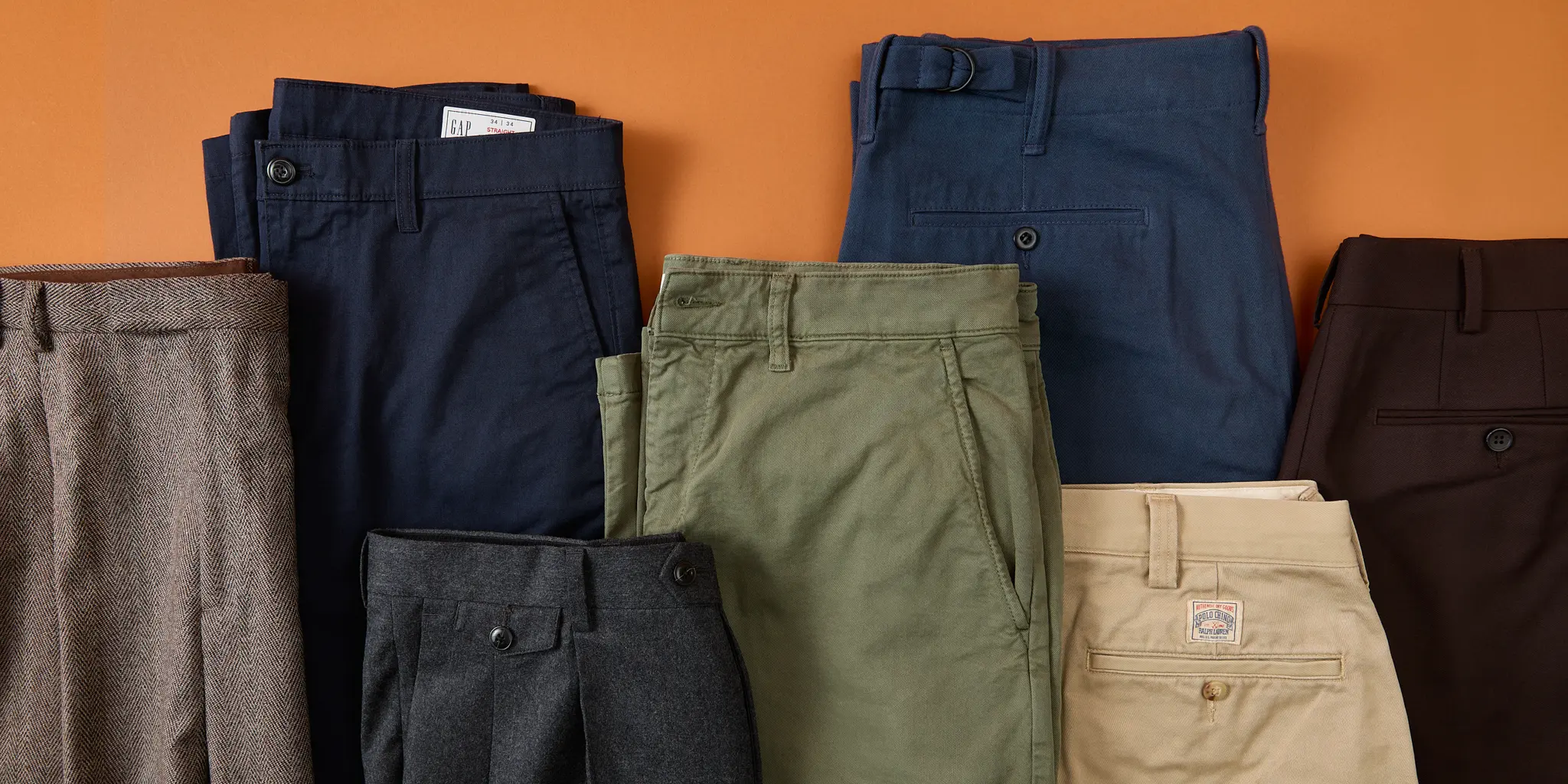
Color decides how often the pants leave your closet. Khaki, olive, navy, stone, tobacco, and charcoal are the safest choices because they pair with American wardrobe staples. They work with denim jackets, flannels, polos, hoodies, cardigans, and soft blazers.
Khaki remains the classic, but olive may be the more useful modern choice. It hides wear better, pairs easily with black, white, gray, navy, and brown, and feels less corporate than standard beige. That makes it strong for men who want casual office style without looking like they are dressed for a 2008 sales meeting.
The unexpected move is stone or off-white. Many men avoid lighter pants because they fear stains or attention, but a good stone chino can make simple outfits look sharper. Wear it with a navy sweater and brown loafers, and the whole look feels intentional without trying too hard.
Conclusion
Men’s style is moving toward honesty. Clothes that pinch, pull, and demand constant adjustment no longer feel like proof of effort. They feel like bad negotiation. The better move is choosing pants that give the body space while keeping the outfit clean, grounded, and adult.
Relaxed fit chinos are not a rejection of style. They are a rejection of the idea that style has to feel restrictive to look serious. American men are building wardrobes around real days now: commutes, hybrid offices, weekend plans, school events, travel, and long meals where comfort matters after the first hour.
The smartest next step is simple. Try one pair in a neutral color, wear it with clothes you already own, and judge it by how often you reach for it. If it makes your shirts, shoes, and jackets feel easier to wear, you have found more than a new pant. You have found a better rhythm for getting dressed.
Frequently Asked Questions
Are relaxed chinos better than slim fit pants for men?
They are better for many men because they offer more room through the thigh, seat, and leg without losing polish. Slim pants still work for some body types, but relaxed chinos usually feel easier, move better, and look more current when styled with balanced shoes and tops.
How should men’s chinos fit in a modern wardrobe?
They should sit cleanly at the waist, allow movement through the seat and thigh, and fall with shape instead of clinging. The leg can be roomier, but it should not look baggy. A small break near the shoe often gives the cleanest everyday look.
Can relaxed chinos be worn for casual office style?
Yes, they work well in many casual office settings when paired with polished pieces. Try them with an Oxford shirt, knit polo, soft blazer, chore jacket, or clean leather sneakers. The key is choosing structured fabric and avoiding pairs that look too loose or wrinkled.
What shoes look best with relaxed men’s chinos?
Leather sneakers, suede loafers, desert boots, chunky derbies, and retro runners all pair well. The shoe should have enough visual weight to balance the wider pant leg. Narrow, thin shoes can make the outfit feel uneven, especially with fuller hems.
Are slim fit pants out of style for men?
They are not gone, but they are no longer the automatic default. Many men now prefer pants with more room because they look calmer and feel easier. Slim fits still work when they suit the body, but tight, calf-gripping cuts look dated fast.
What color chinos should a man buy first?
Khaki, olive, navy, or charcoal are the safest first choices. Olive is especially useful because it pairs with black, white, gray, brown, and denim. A neutral color helps the pants work across office days, weekends, travel, and casual dinners.
Do relaxed chinos make men look bigger?
Poorly cut relaxed pants can add bulk, but good ones often create a cleaner silhouette. Room through the thigh can reduce pulling and hard wrinkles, which makes the body look more balanced. The hem, rise, and shoe choice matter more than width alone.
How do you style relaxed chinos without looking sloppy?
Keep the waist fitted, choose structured fabric, and pair the pants with tops that have clean shape. Avoid oversized shirts unless the full outfit is intentional. Finish with shoes that match the pant’s weight, then tailor the length if the hem pools too much.
Leave a Reply